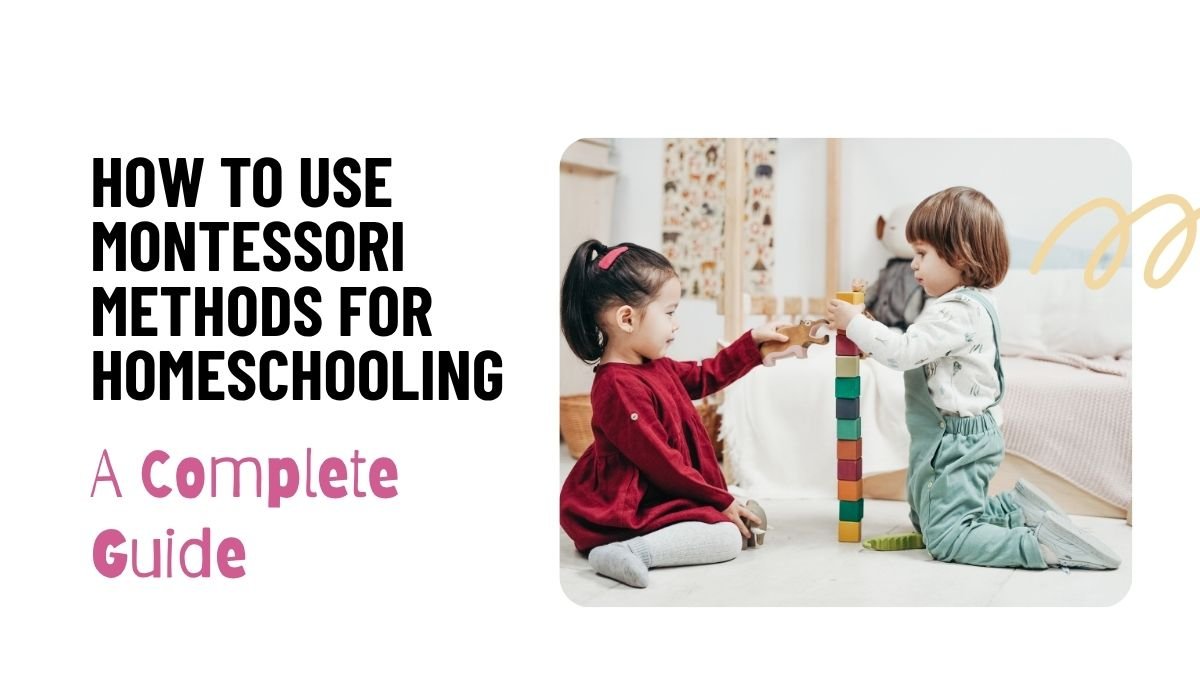
The Montessori Method of Homeschooling – The Way to Independence and Creative Learning
Many parents think of homeschooling nowadays as educating their kids at home. Each has its reasons, some wanting to spend time with their kids, others wanting to keep their pressure off schools, and some allow children to learn at their own pace and interests. In all of these situations, Montessori homeschooling can be very effective.
This method emphasizes children’s independence, natural abilities, and learning from environments created for them. Parents have to create those right environments for their kids and take on a guiding role rather than doing the guiding. Let’s see how to adopt this method in the home.
Understanding Montessori Philosophy
Respect for children is the prerequisite of Montessori. Each one has his own interest, ability to learn, and speed to learn. When parents help children learn based on their interests, they are learning with much enthusiasm and concentration.
Absorbent Mind
The mind of the child is a sponge if it is younger than 6 years. It can take in languages, behavior, and social skills from the environment very fast. Parents should be good examples of good words and good behavior.
Sensitive Periods
There are periods in which children can learn to do certain things most quickly. For example, ages 2 to 4 years are best for language learning, while children between ages 3 and 5 learn discipline and organization better.
Prepared Environment
The environment in which children learn should be safe and allow for independent learning. It implies that there should be open space in a house, tables and chairs suitable for them, and organized furnishings.
The Self-Education
According to Montessori, true learning arises when a child interacts with his environment and materials. This is due to the self-education aspect in all children’s life stages, whereby parents guide but do not burden the child with teaching.
2. How to Be At Home
For a child being taught at home through Montessori, a quality home environment is paramount.
- Hold the house tidy, clean, and organized. Everything has its place. Book basket, box for toys, and a table set apart for art materials are some examples.
- Fit furniture according to child’s size. Now there are small chairs and small tables where kids can sit and work alone.
- Store books and toys on low shelves so children can easily take things out and bring them back. Promote responsibility and independence.
- Make children participate in household chore activities, such as drying clothes, cleaning, pouring water, or helping in the kitchen. Build their confidence and invaluable life skills.
3. Practical Life Activities
Practical life activities, small household tasks, are the most important things in the Montessori method. They are the ones that empower the child to be able to do things independently, and bring forth the sense of responsibility.
Examples
- Pour water or cereal from one container to another.
- Carrying toys or things from one place to another.
- Putting on and taking off clothes independently.
- Setting the table or arranging plates.
- Watering the plants.
These activities develop the mastery of children’s hand-eye coordination, and from time to time learn how to do things on their own.
4. Practical Learning – Sensory and Language Activities
Children learn better when they understand things by touching, seeing, and doing. These are called in Montessori sensory activities.
Examples
- Play around with blocks that are all different colors.
- Recognizing shapes like circles, squares, and triangles.
- Identification of objects with different textures by touching them – such as cloth, wood, and plastic.
For language:
- Add new words to conversations.
- Tell stories and read books to children.
- Teach children to read by introducing sounds to words: k-i-ta-b book.
This helps children learn the language as well as read and write faster.
5. Work Periods and Routines
Montessori considers that a child should work around his or her interest even if it is playing with Legos.
- Parents should observe the most attractive activities to a child and cater for more activities in that direction.
- Period of work should be short and specific. They enjoy activity between 20-30 minutes; they tired out with long lectures.
- Let children decide what task or subject they want to spend their time on. Just like that, they make choices themselves; it makes them grow with confidence and independent.
6. Reflection and Growth
Parents must learn continuously.
- Become part of the Montessori community and read books and online manuals.
This will give parents fresh ideas and encourage them through other parents.
Above all, every child is different and individualized must be the methods. Follow the Child says Montessori’s golden principle.
Conclusion
If this method is made in proper form for homeschooling, children will learn independence, creativity, and self-reliance.
Practical life activities help develop children into real, mature people.
Those activities enhances understanding capabilities and thinking capabilities of individual children.
Books and stories fast build a love for reading.
Self-reliance is instilled in children by making a habit of choosing their own tasks. That gives the child confidence in himself and independence.
It takes proper supervision, a secure environment, and patient supervision from the parents to realize the child’s full potential within the sanctity of that child’s own home through the Montessori method.