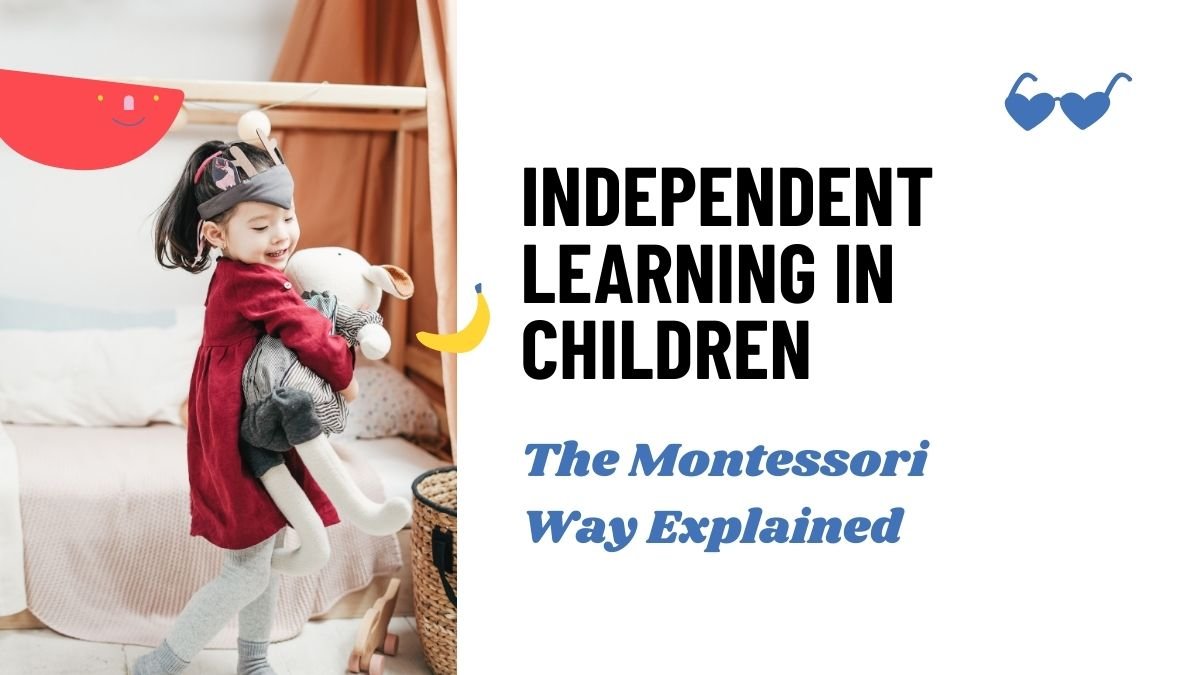
Self-Dependent Learning and the Montessori Method – A Method of Building Self-Reliance in Children
Every parent wants their children to become self-dependent, confident individuals immersed in lifelong learning. This is possible only if there exist opportunities for such experiences in which children independently experiment, sometimes making mistakes, from an early stage.
The Montessori Method is the philosophy that embodies these ideals.
Children are not encouraged to memorize a book in Montessori. They are given an environment where they can select activities of interest, pursue them freely, and learn by experience. In the procedure, the teacher does not intervene; he or she simply guides and shows the way.
Foundations of Independent Learning Using Montessori Principles
1. Prepared Environment
The first foundation of Montessori education is a prepared environment for children.
- The room or home is decorated according to the child’s height and needs.
- Lightweight and small objects are provided that the child can use independently.
- Learning materials are placed on open racks – puzzles, counting beads, wooden toys, small brooms, and cloths.
Example: When a child is thirsty, a small jug and glass are placed near them so they can pour water themselves. This builds self-reliance and confidence.
2. Freedom Within Limits
Children are given freedom with limitation.
- The child can choose an activity.
- The only rule: don’t disturb others and complete the task properly.
Example: The child may build a tower with blocks or solve puzzles, but throwing blocks or not cleaning up afterward is unacceptable.
This develops independence, responsibility, and discipline.
3. Self-Directed Activity
When a child chooses an activity themselves, they approach it with enthusiasm and focus.
- Children interested in colors engage in recognition activities.
- Children interested in math practice addition and subtraction with beads or shapes.
This enhances decision-making ability and self-confidence.
4. Hands-On Self-Correcting Materials
Montessori materials allow children to discover and correct their own mistakes.
- A block won’t fit if placed wrongly.
- Wrong counting won’t match bead numbers.
This is called “Control of Error.” Instead of adults reprimanding, the child becomes self-reliant and confident.
5. Practical Life Activities
Everyday tasks are part of Montessori learning:
- Watering plants
- Washing dishes
- Sweeping and mopping
- Setting the table
- Buttoning clothes or putting on shoes
These simple tasks improve coordination, focus, and pride of achievement.
6. Teacher’s Role – A Guide
Montessori teachers are guides, not lecturers.
- They observe and identify children’s interests.
- New material is introduced only when needed.
- Children learn out of curiosity and interest, developing their own thinking and problem-solving ability.
7. Long and Uninterrupted Work Periods
Montessori classrooms allow long 2–3 hour work periods for deep immersion.
Example: A child working on a puzzle finishes it with satisfaction when uninterrupted, building strong concentration skills.
8. Mixed Age Classrooms
Montessori classrooms bring children of different ages together.
- Younger children learn from older ones.
- Older children gain leadership and responsibility.
This creates a mini-society of collaborative learning.
Some Benefits of Montessori Education
Montessori principles shape the whole character of a child.
- Builds self-sufficiency
- Develops confidence and discipline
- Encourages learning from mistakes
- Cultivates a love for learning
- Enhances social and emotional growth
Example: A child who learns to pour water or switch on a light independently becomes not only self-sufficient but also more likely to help others.
Conclusion
The Montessori style of education teaches children not only how to study but how to live. It develops their ability:
- to make choices,
- to explore,
- to learn from mistakes, and
- to practice freedom with responsibility.
The beauty of Montessori lies in its balance of freedom and discipline. Children learn freely while respecting others and observing rules. These traits prepare them to become assertive, responsible, and happy individuals later in life.